I.Overview
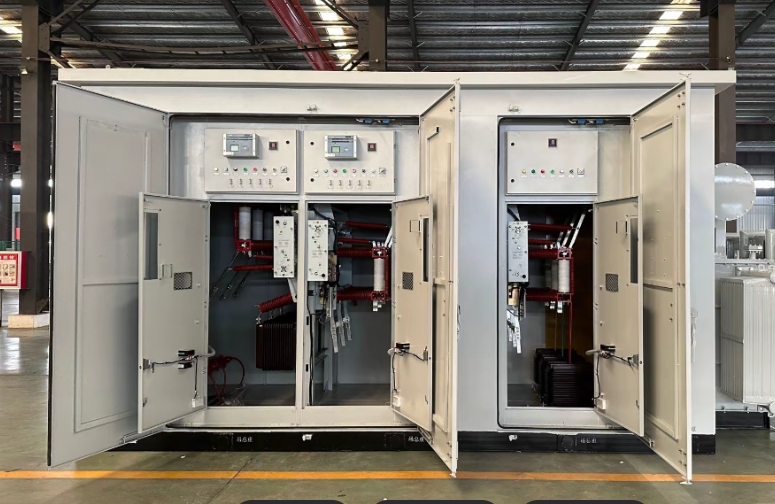
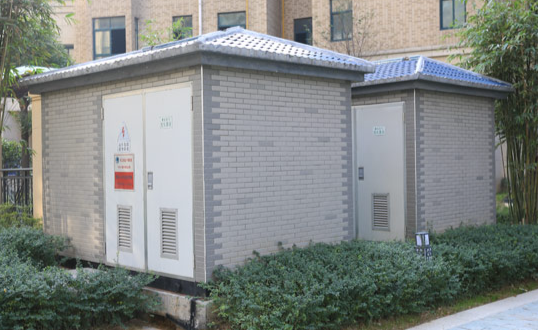
The ENR-YB box-type substation(referred to as"box substation")is a complete set of power distribution equipment that integrates high-voltage switchgear,distribution transformers,and low-voltage power distribution devices into a sealed metal box according to a specific wiring scheme.It combines the functions of high-voltage power reception,transformation,and low-voltage power distribution,and is widely used in residential areas,industrial and mining enterprises,municipal engineering,and other scenarios.It features small size,convenient installation,and reliable operation.
II.Basic structure
Box-type substations are typically divided into three functional compartments(or integrated combinations):
1.High-voltage room:It includes high-voltage circuit breakers,load switches,fuses,lightning arresters,high-voltage transformers,etc.,responsible for receiving high-voltage electrical energy(commonly 10kV/35kV)and achieving overload,short-circuit protection,and voltage monitoring.
2.Transformer Chamber:Equipped with oil-immersed or dry-type distribution transformers,its core function is to step down high voltage(such as 10kV)to low voltage(such as 0.4kV).The chamber body is equipped with cooling,ventilation,and protective structures.
3.Low-voltage room:It includes low-voltage circuit breakers,busbar,metering devices,reactive power compensation devices,etc.It is responsible for distributing the reduced voltage electrical energy to the terminal load,and achieving metering,protection,and reactive power compensation.
III.Main types
1.European-style box transformer:It is divided into three independent compartments(high voltage/transformer/low voltage),featuring a compact structure and high protection level,suitable for urban distribution networks.
2.American-style box transformer:Integrating the transformer and high-voltage switch into the same oil tank results in a smaller size and lower cost,making it commonly used in rural areas or temporary power supply scenarios.
3.Modular box-type substation:It allows for flexible assembly of components(such as transformers of different capacities and protection configurations)according to specific needs,adapting to personalized power supply requirements.
IV.Ordering Instructions
1.Product(indicate model,parameters,and configuration);
2.Primary system diagram(if there are customized wiring requirements);
3.Plan of installation site(indicating dimensions and directions of incoming and outgoing lines);
4.Special scenario descriptions(such as high cold and high altitude).